IMPALA evidence update webinar: what we know, an independent cost-effectiveness review, and the path to scale
$7–30 per DALY averted after heavy discounting. What does it mean, and how robust is it? Join GOAL 3 and Rethink Priorities as we explore the latest evidence on IMPALA and how it compares with other global health interventions.
IMPALA Evidence Update: Cost-effectiveness Webinar
Wednesday Nov 4
16:00 CET | 10:00 EST |18:00 EAT
Register HereProgramme
- The problem and how IMPALA works (Dr Niek Versteegde)
- The BMJ Paediatrics Open paper: costs before and after IMPALA (Dr Jobiba Chinkhumba)
- Evidence to date: results and limitations (Dr Eveline Geubbels)
- Independent cost-effectiveness review (Dr Britta Jewell, Rethink Priorities)
- Regional perspective on what ministries need to scale innovation
(Dr Ntuli Kapologwe, ECSA-HC) - What’s next: research and scale-up (Dr Niek Versteegde)
- Q&A

.png)
Why this webinar?
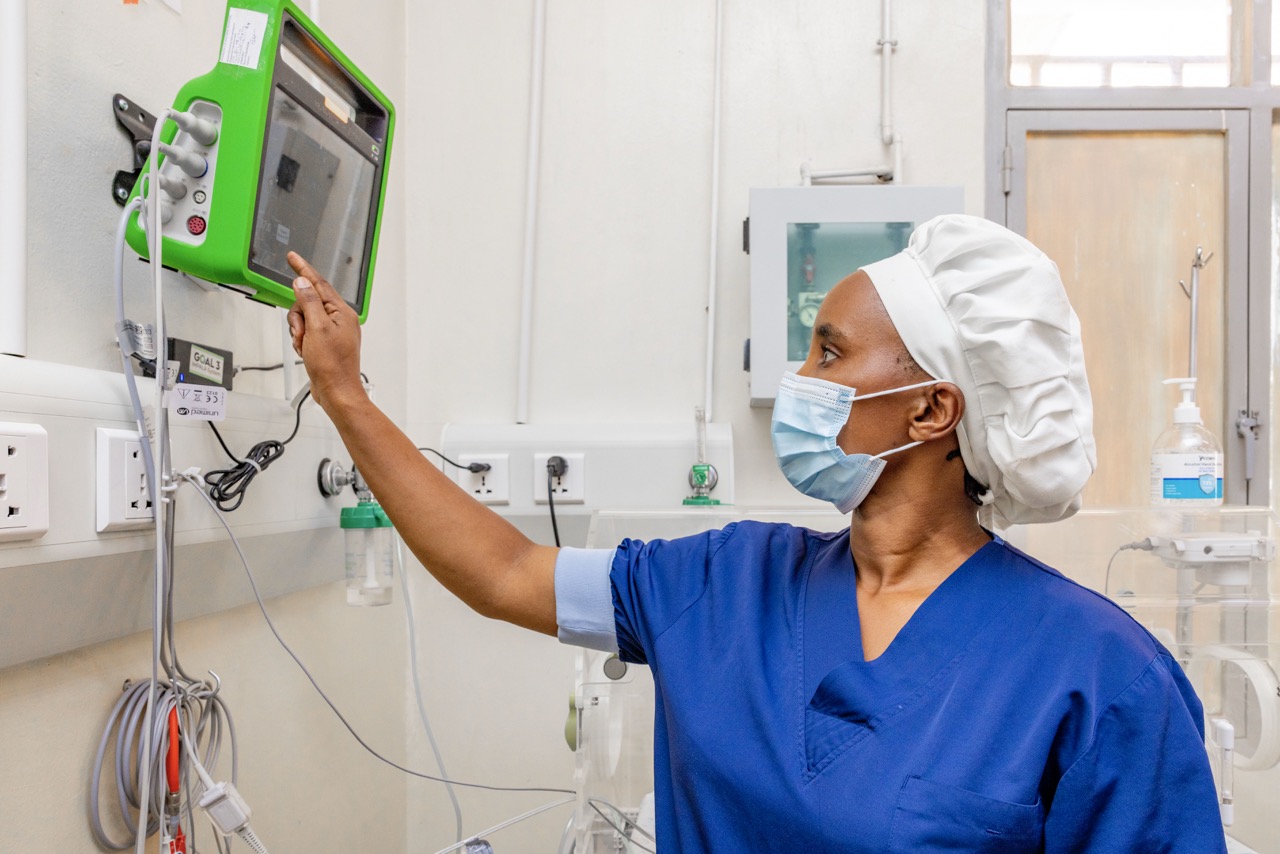
Many children and newborns die in resource-constrained hospitals because deterioration is not noticed and acted on in time. IMPALA is a ward-level monitoring and clinical support platform that helps solve this problem by giving health workers live insight and oversight into patient status, allowing them to quickly respond and act upon deterioration.
New evidence on the impact and cost-effectiveness of IMPALA has emerged - including a recent publication in the BMJ Paediatrics Open and a cost-effectiveness analysis from Rethink Priorities. In this webinar, GOAL 3, ECSA-HC, the authors of the BMJ paper, and Rethink Priorities will dive into this new evidence on IMPALA, and explore what it means for those looking to implement, scale or support cost-effective global health interventions.
What the evidence shows so far

Before-and-after studies in two Malawian hospitals found 40% and 51% lower mortality and fewer critical illness events in paediatrics. In neonates, there is emerging data from five hospitals, mostly pointing to lower mortality; two of five results are statistically significant.

98.8% of trained users in a real-world study would (very) likely recommend IMPALA. IMPALA also had high usability scores and 45% less self-reported time spent on monitoring.

At about $2.90 per admitted child, IMPALA is estimated to be very cost-effective. Paediatric wards even showed lower health-system costs through shorter stays (BMJ Paediatrics Open, 2026). Rethink Priorities estimates IMPALA to cost $7-30 per DALY averted.
What is the independent cost-effectiveness review from Rethink Priorities?
GOAL 3 commissioned and funded an independent cost-effectiveness analysis by Rethink Priorities, a research organisation that evaluates global health interventions. After heavy discounting they calculated that IMPALA costs $7–17 and $12–30 per DALY averted for paediatrics and neonates respectively. Importantly, the report from Rethink Priorities concludes that IMPALA is cost-effective not just because of the mortality reduction, but because of how affordable the intervention is, with IMPALA remaining highly cost-effective as long as it reduces mortality by about 1–2%. Read the full report here.
Speakers
Dr Ntuli Kapologwe
Dr Ntuli A. Kapologwe is Director General of the East, Central and Southern Africa Health Community (ECSA-HC), an intergovernmental organisation of eleven member states. He previously held senior posts in Tanzania’s health sector, including Director of Preventive Health Services at the Ministry of Health. He holds an MD and a PhD in public health, with doctoral research on how direct facility financing affected maternal, newborn and child health services. ECSA-HC formally endorsed IMPALA at the 16th Best Practices Forum in Eswatini, August 2026.
%20(41).png)
.png)
Dr Britta Jewell
Dr Britta Jewell is a Senior Researcher at Rethink Priorities. Her background is in applying mathematical modelling of global health interventions to improve impact and cost-effectiveness in sub-Saharan Africa. Dr Jewell holds a PhD in Infectious Disease Epidemiology from Imperial College London and an MSc in the History of Science, Medicine, and Technology from the University of Oxford.
Dr Jobiba Chinkhumba
Dr Jobiba Chinkhumba is a health economist in the Department of Health Systems and Policy at the School of Global and Public Health, Kamuzu University of Health Sciences in Blantyre, Malawi. His research focuses on economic evaluation and health systems policy. As a member of the IMPALA consortium, he worked on the cost-effective analysis in the BMJ Paediatrics Open paper.
%20(42).png)
%20(16).png)
Dr Niek Versteegde
Dr Niek Versteegde is a general practitioner and tropical doctor with expertise in global health and access to care. While working in Tanzania, he saw the need for better technology to manage and prioritise patients. That experience sparked the idea for IMPALA, a patient monitoring and management solution for under-resourced hospitals, and in 2019 he founded GOAL 3 to build it. He leads GOAL 3 as CEO, and IMPALA is now used in more than 60 hospitals in six countries across sub-Saharan Africa.
Dr Eveline Geubbels
Dr Eveline Geubbels is an epidemiologist and global health researcher with 25+ years of experience in health systems and impact evaluation across Africa, currently serving as Chief Scientific Officer at GOAL 3 Social Enterprise. Her work focuses on strengthening healthcare systems and improving patient outcomes through evidence-based research and innovation in low-resource settings.
%20(17).png)
Frequently asked questions
Funders and philanthropic advisors, ministry and government staff, NGOs and implementing partners, and doctors and nurses working in child and newborn care. No medical or technical background needed.
Yes, we love to engage with people interested in this subject, and will leave plenty of times for questions during the webinar with a Q&A at the end.
Yes, if you register, but cannot attend, you will receive a recording following the webinar.
Yes
GOAL 3 commissioned and funded it; Rethink Priorities controls its methods and conclusions
Reach out to us at info@goal3.org
See a complete overview of our evidence.
Read the BMJ Paediatrics Open article.